Coral Reef Initiative Overview
The Commonwealth of the Northern Mariana Islands (CNMI) Coral Reef Initiative (CRI) is a cross-agency effort dedicated to protecting and preserving the CNMI’s coral reefs and ensuring the responsible management of the resources they support. Through biological monitoring, habitat restoration, research, enforcement, education, and outreach, the CRI works to better understand and address the challenges facing coral reef ecosystems throughout the CNMI.
Coral reefs are an important part of life in the CNMI, supporting cultural traditions, local livelihoods, fisheries, tourism, recreation, and coastal protection. However, increasing development and the impacts of climate change have placed growing pressure on these ecosystems, contributing to declines in coral reef health. Protecting and restoring these reefs is essential not only for the health of our marine environment, but also for the cultural, economic, and physical well-being of CNMI communities and future generations.
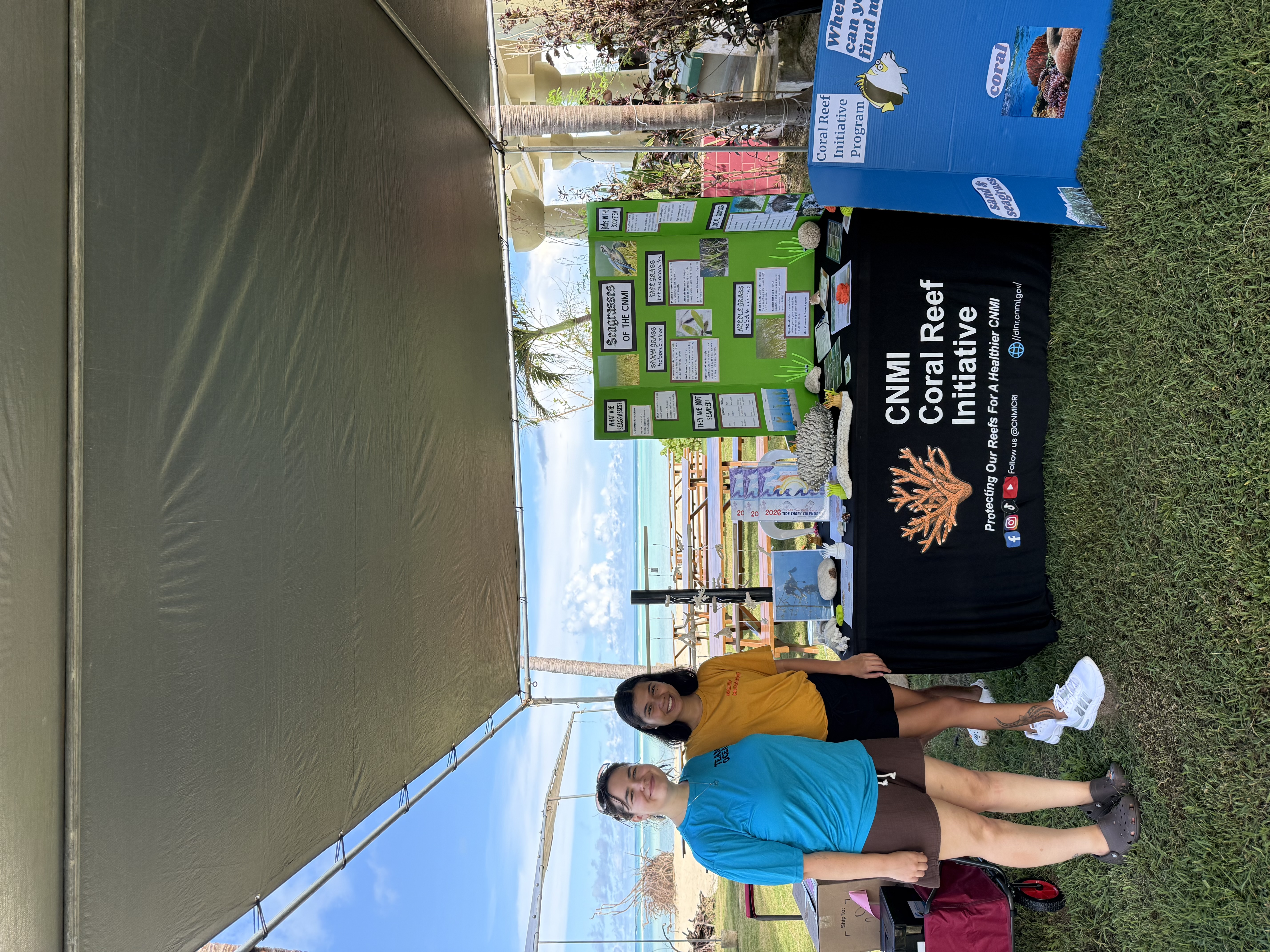 Photo: Outreach at DCRM Waves of Recovery
Outreach and Education
Education Mission
To educate and inspire a community about our diverse near shore coral resources, the benefits of these resources, as well as current threats and conservation actions that individuals can take to protect our coral reefs and marine environment.
Why Outreach and Education Matter
Outreach and education are essential to connecting science, conservation, and the community. By sharing information from our monitoring and research efforts, we can help increase understanding of CNMI’s marine ecosystems and the importance of sustainable fisheries and healthy reefs. Building awareness and strengthening partnerships helps ensure that communities and stakeholders have the knowledge needed to support conservation efforts and contribute to the long-term health and sustainability of our marine resources.
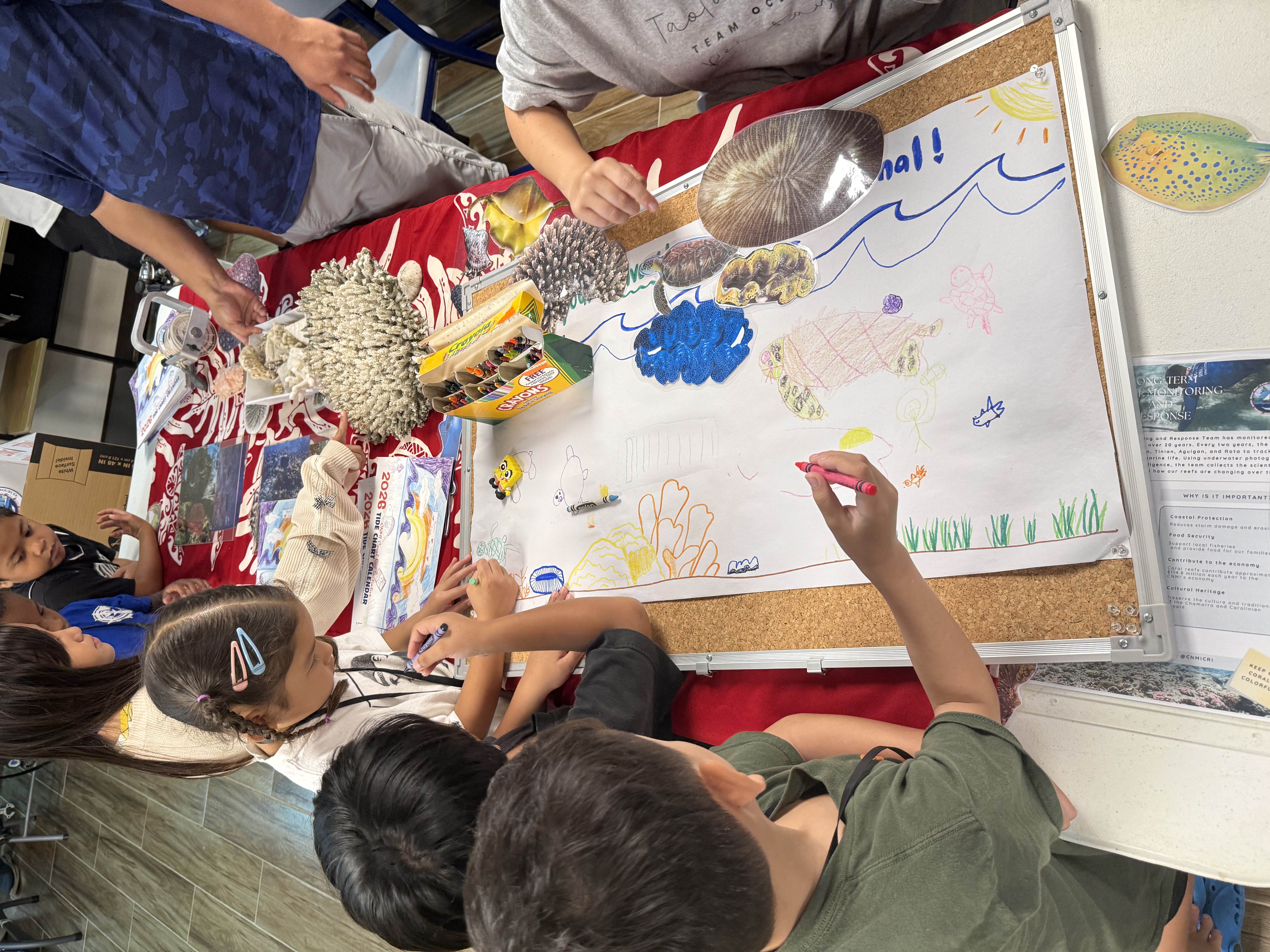 Photo: Outreach at DYS Summer Youth Camp
Communication Goals
CRI's communication efforts focus on three key goals:
- Increase understanding of the value and current condition of CNMI’s coral reef ecosystems.
- Connect people with action by providing information and tools that encourage responsible stewardship.
- Strengthen partnerships by sharing knowledge and resources among conservation practitioners, agencies, organizations, and community members.
CRI recognizes that different communities receive and respond to information in different ways. Outreach efforts are designed around the needs, interests, and experiences of specific audiences, including community members, fishers, tourism partners, students, and other stakeholders. Messages and outreach activities may use a combination of social media, hands-on activities, community meetings, print materials, radio, signage, and other communication tools to effectively reach different audiences.
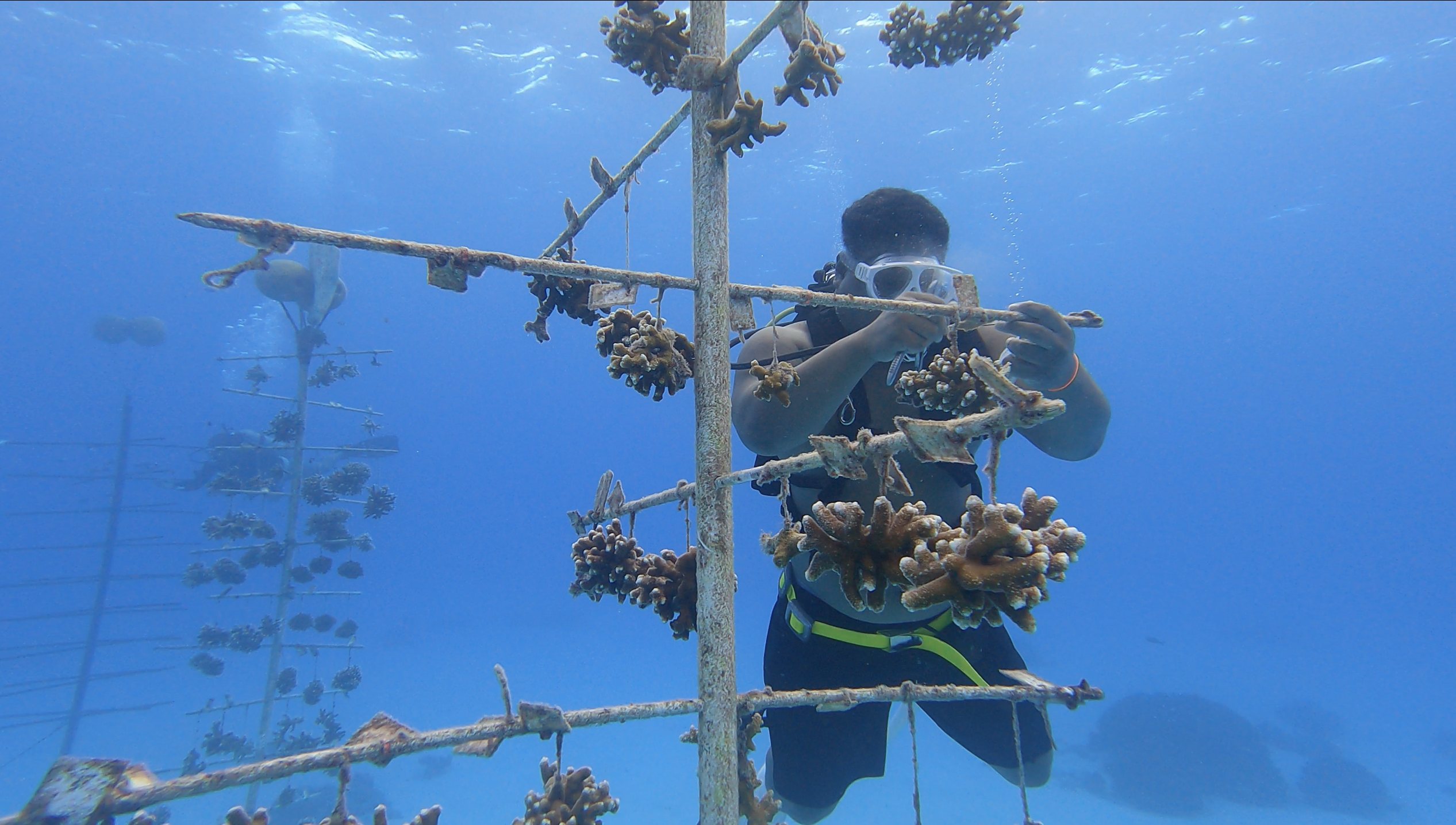 Photo: Coral Restoration Technician - Jordan Suel
Coral Restoration and Response
Coral reefs in the CNMI face many challenges, including typhoons and storms, coral bleaching, disease, invasive species, pollution, and other disturbances. The Coral Restoration & Response Team helps the CNMI prepare for these impacts, respond when damage occurs, and support the recovery of affected reefs. Restoration is not only about putting corals back in the water—it is about coordinating people, resources, science, and long-term planning to give damaged reefs the best opportunity to recover.
The Restoration & Response Team serves as a central point of coordination for coral restoration and reef response across the CNMI. This includes maintaining coral nurseries, planning and conducting coral outplanting and restoration activities, monitoring restoration efforts, supporting responses to bleaching, disease, Crown-of-Thorns Starfish (COTS), storms, oil spills, and other marine disturbances, and coordinating training for agency staff and partners. They also bring together government agencies, NGOs, businesses, dive operators, community groups, and other partners through working groups, meetings, and outreach.
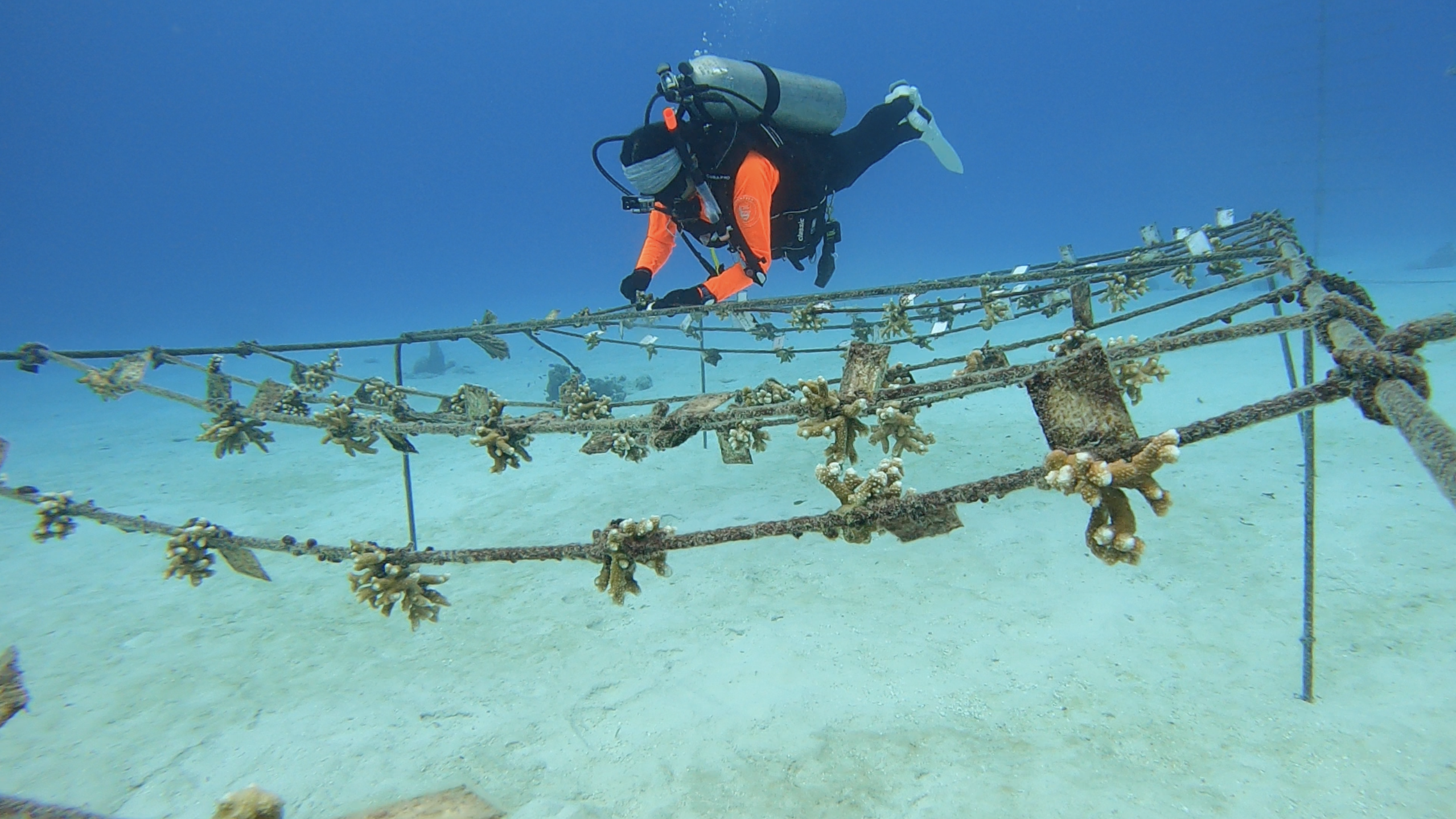 Photo: Coral Restoration & Response Coordinator – Kalani Reyes
Long-Term Marine Monitoring and Response Team
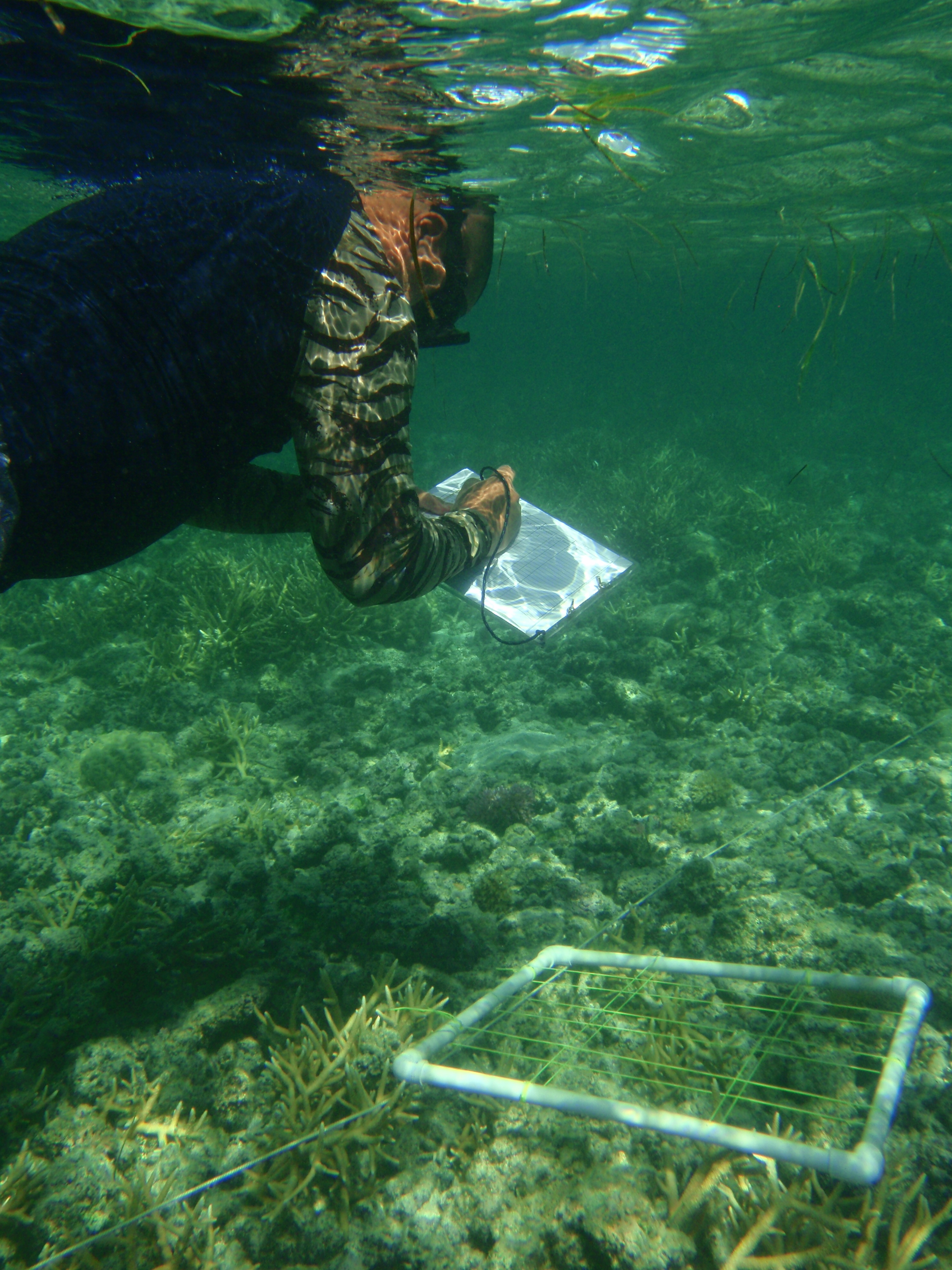 Photo: Marine Biologist Technician - John Iguel
Marine Monitoring & Response Team
For over two decades, the Marine Monitoring & Response Team (MMRT) has provided the CNMI with the local capacity to assess, monitor, and respond to changes in coral reef and associated marine ecosystems. Our team collects long-term data on coral, fish, algae, seagrasses, and other ecologically and economically important organisms across a variety of marine habitats and management areas throughout the CNMI. These data provide a foundation for understanding reef health, identifying changes and emerging threats, and supporting informed management and conservation decisions. As the program continues to evolve, the MMRT is expanding its role beyond monitoring to support locally driven coral restoration, response to reef disturbances, and restoration capacity-building throughout the CNMI.
Why Long-Term Data Matter
Long-term monitoring provides a clearer picture of how CNMI’s coral reefs and marine ecosystems change over time. By consistently collecting data on coral, fish, algae, seagrasses, and other marine life, we can identify trends, recognize changes and emerging threats, and understand the effects of natural and human-driven impacts. This information provides a strong foundation for informed management, conservation, and restoration efforts and helps guide actions needed to support healthy, resilient reefs for the future.
What We Measure
Our monitoring team measures several aspects of coral reef health during surveys to better understand the condition and diversity of CNMI’s reef ecosystems:
- Benthic cover — the types and amount of coral, algae, and other organisms covering the reef.
- Coral — coral species, abundance, diversity, composition, and size.
- Reef fish — fish species, abundance, diversity, size, species composition, and biomass.
- Algae — species composition and richness.
- Seagrass— abundance, diversity, and species composition in monitored lagoon habitats.
- Marine invertebrates — including sea cucumbers, sea urchins, crown-of-thorns starfish, and giant clams, measuring their abundance, diversity, and species composition.
This information allows us to track changes in reef communities and better understand the overall condition of CNMI’s coral reef ecosystems.
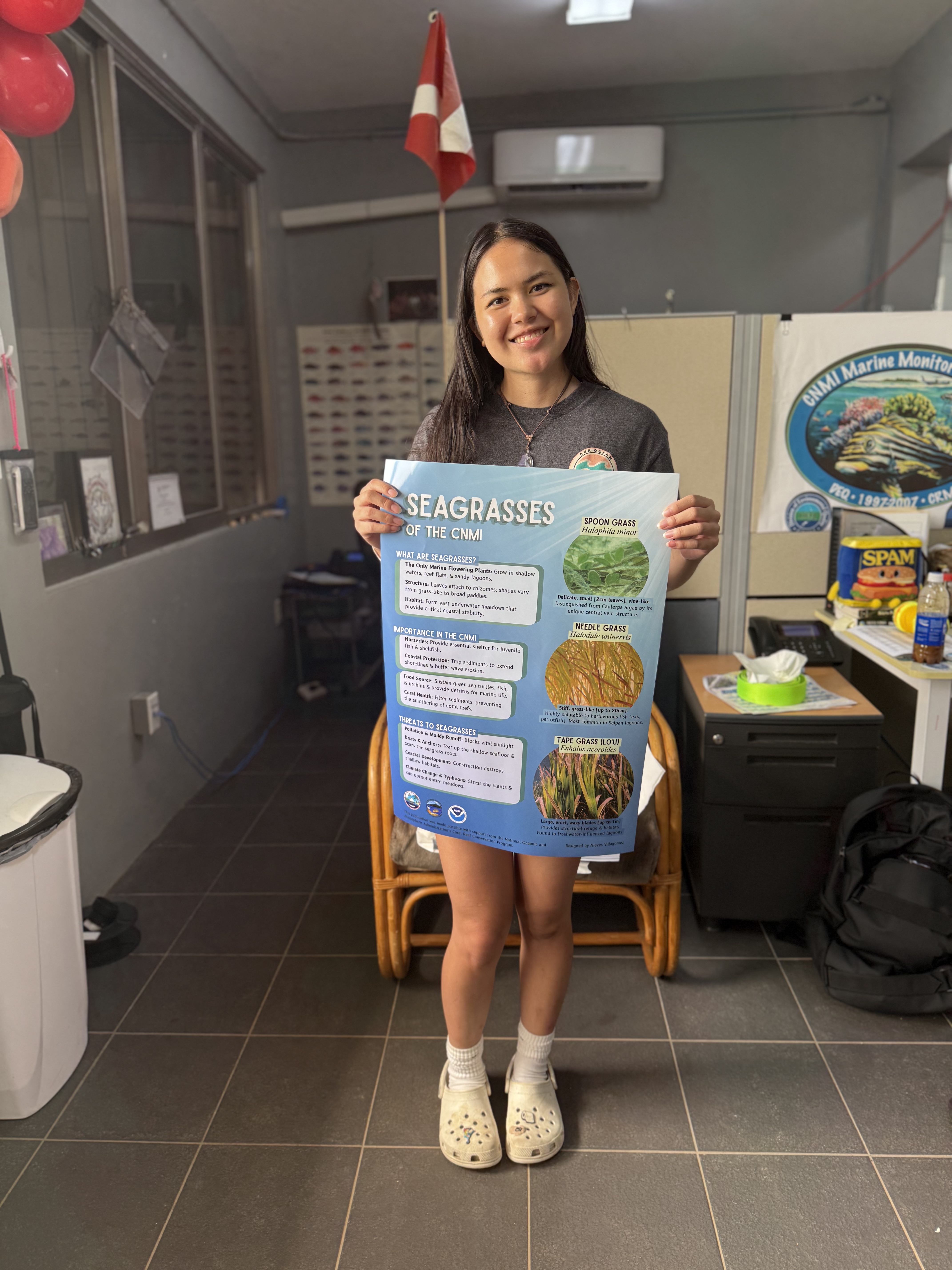 Photo: 2026 DCRM-CRI Summer Intern, Nieves Villagomez
How Do We Measure the Health Our Coral Reef
The CNMI Long-Term Marine Monitoring and Response Program surveys approximately 50 sites across Saipan, Tinian, and Rota on a rotating basis. Our Marine Monitoring Team uses standardized ecological survey methods along 50-meter transects to assess reef health and changes over time. Surveys measure benthic cover, coral communities, algae, fish populations, seagrass, and other marine invertebrates. Underwater photographs and quadrats are used to measure the abundance and diversity of corals and algae, while fish surveys record species, abundance, and size. These data help us understand the condition of CNMI’s coral reef ecosystems and track changes at both impacted and relatively healthy survey sites.
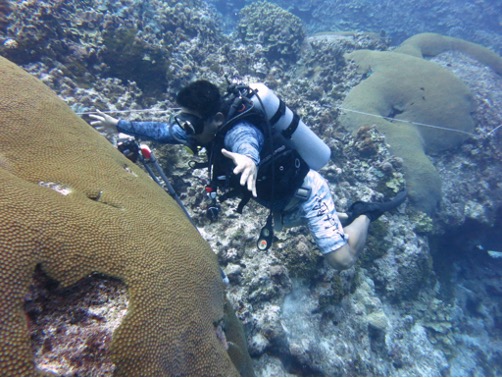 Photo: Marine Biologist - Ian Iriarte
Improving Our Understanding of the CNMI's Coral Reefs
The Long-Term Marine Monitoring Program is a critical source of data and information on the health of coral reef ecosystems across the CNMI.
- It provides long-term data on coral, fish, algae, seagrass, and other marine life, helping us understand reef community composition, abundance, diversity, and changes over time.
- Standardized surveys are conducted at monitoring sites across Saipan, Tinian, and Rota, including both impacted areas and relatively healthy reference sites.
- This information helps us track the condition of CNMI’s reefs and better understand how they are changing.
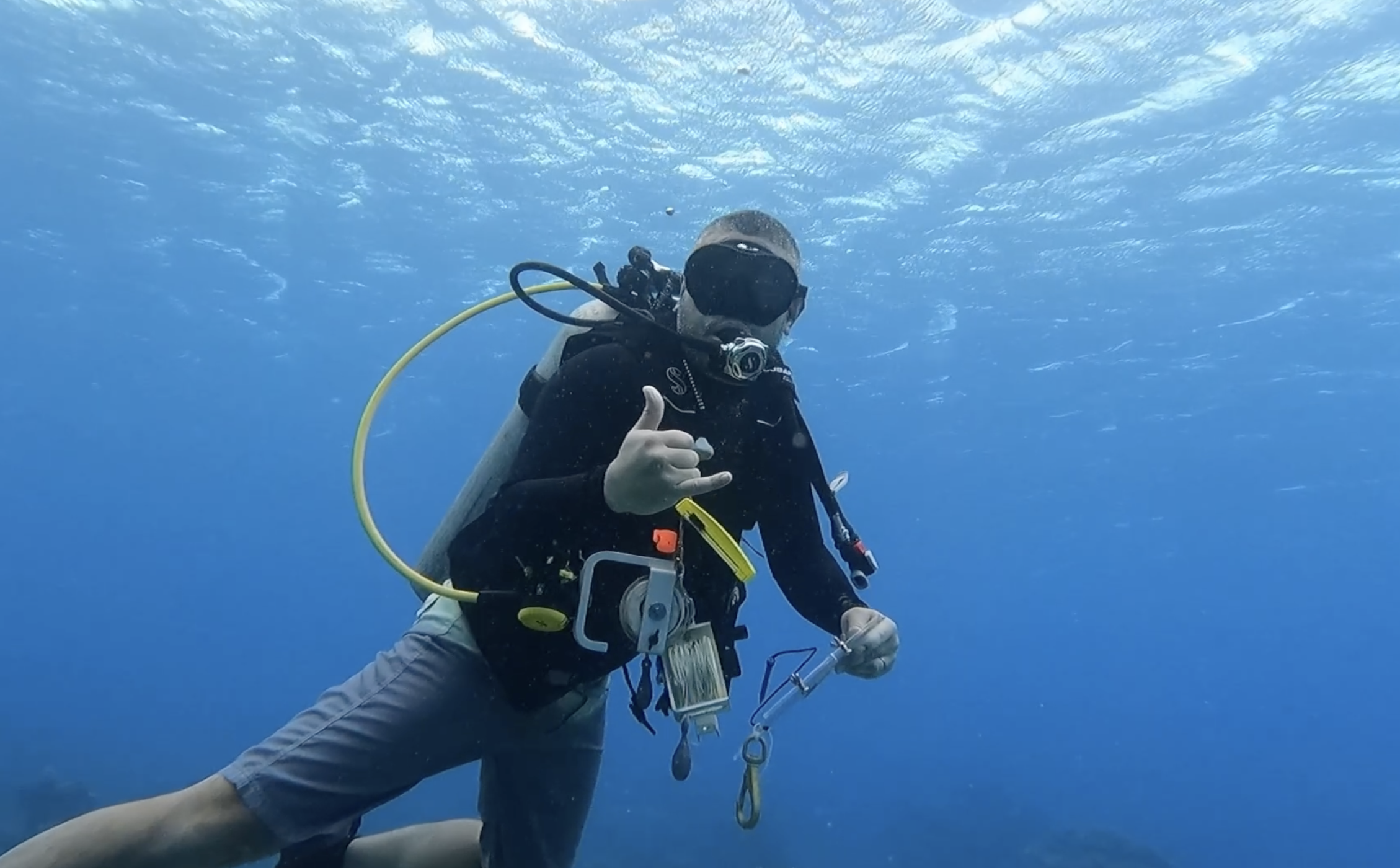 Photo: Lead Biologist - Frank Villagomez
Policy
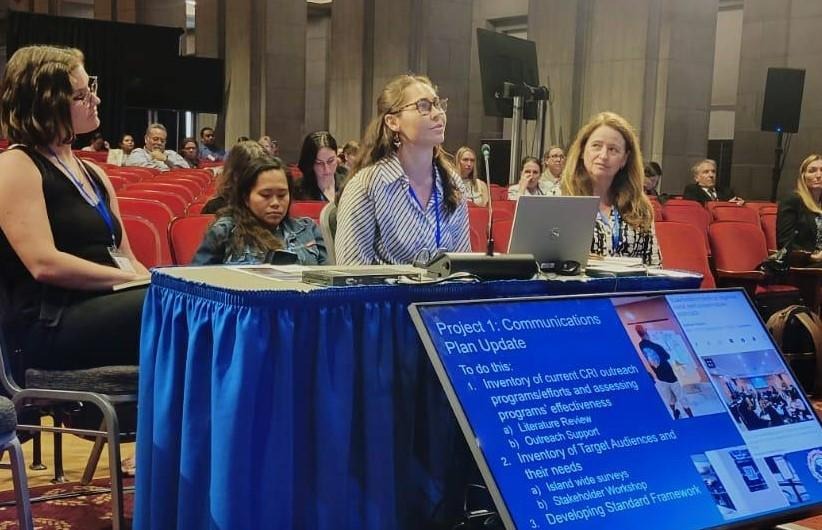 Photo: Policy Planner: Bailey Warren at 50th U.S. Coral Reef Task Force Meeting
Protecting CNMI’s coral reefs requires more than monitoring, restoration, and community outreach. Strong policies, regulations, and partnerships provide the foundation that allows these efforts to continue and have a lasting impact. The CRI Policy Planner helps ensure that decisions affecting coral reefs, fisheries, marine protected areas, and coastal resources consider the long-term health and resilience of CNMI’s reefs.
The Policy Planner connects science, management, and government decision-making by reviewing existing regulations, identifying policy needs, and supporting the development of legislation, agreements, management plans, and other tools that strengthen coral reef protection. They also work with other government agencies, enforcement programs, community partners, and other environmental organizations to help align policies with CNMI’s coral reef management priorities.
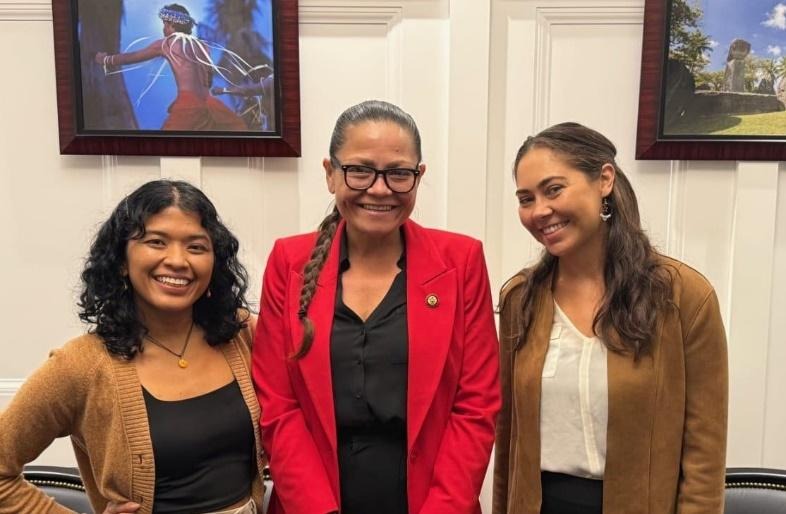 Photo: CRI Coral Restoration Coordinator- Kalani Reyes and CRI Policy Planner- Bailey Warren Meet with CNMI Congressional Representative, Kimberlyn Kings-Hinds
Policy helps turn what we learn about our reefs into actions that can be supported through laws, regulations, and long-term management. By strengthening the policies that protect coral reefs and the people and communities that depend on them, CRI can help build a more resilient CNMI for generations to come.